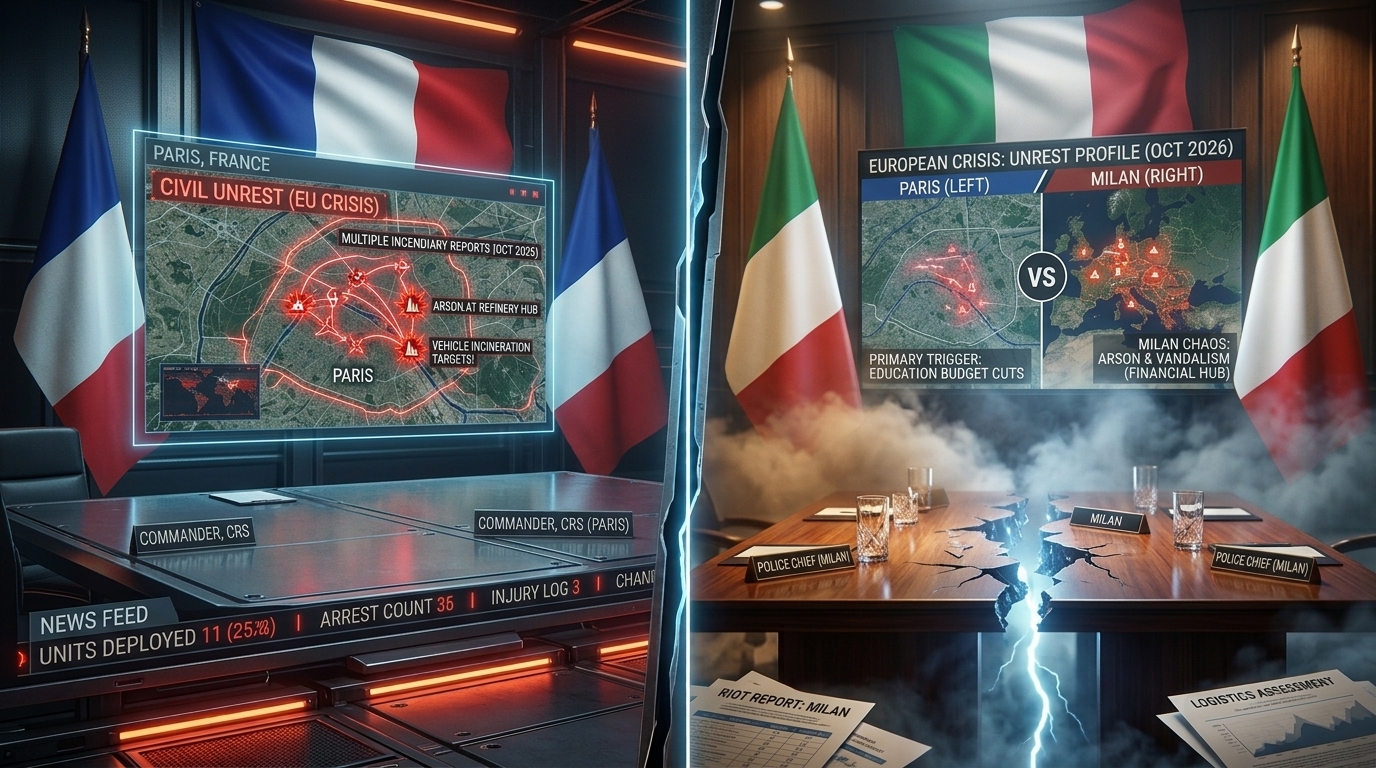
A wave of intense civil unrest has paralyzed major European metropolitan hubs, transforming historical city centers into volatile confrontation zones. What began as peaceful, organized student demonstrations against rising inflation and deeply unpopular education budget cuts has rapidly devolved into destructive, violent rioting.
As of October 18, 2026, emergency protocols have been activated in both France and Italy, with law enforcement agencies struggling to contain the widespread chaos.
1. Paris Burns: Tear Gas and Flames Infiltrate the French Capital
In France, the situation deteriorated rapidly after thousands of university and high school students took to the streets to protest the government’s newly proposed fiscal austerity measures. The economic reforms include massive budget reductions for public education infrastructure and a substantial lowering of student social stipends to combat national debt.
While initial marches through the heart of Paris were peaceful, radical factions quickly hijacked the movement. By nightfall, parts of the capital descended into sheer chaos. Rioters erected makeshift barricades, smashed retail store windows, and set dozens of parked vehicles and trash receptacles ablaze. French police units responded aggressively, deploying heavy salvos of tear gas, rubber batons, and armored tactical vehicles to clear the streets, resulting in dozens of injuries and over a hundred arrests.
2. Milan in Turmoil: Financial Hub Rocked by Arson and Property Damage
Simultaneously, the northern Italian financial engine of Milan is facing a nearly identical crisis. Discontented youth and labor unions organized a mass walkout to publicly condemn the soaring cost of living, skyrocketing rent prices, and a severe lack of affordable student housing across the Lombardy region.
The demonstrations took a dark turn near the city center. Radical groups targeted corporate bank branches, global luxury retail outlets, and government offices, defacing historic architecture with anti-establishment graffiti and shattering storefronts. Several vehicles were overturned and set on fire near busy transit hubs. Milanese riot police were forced to utilize high-pressure water cannons and tear gas canisters to disperse aggressive crowds throwing bricks and firecrackers, turning the city's iconic avenues into smoky battlegrounds.
3. The Underlying Fuse: Austerity and Inflation Spark Youth Fury
Sociological and economic analysts warn that these coordinated outbreaks are not isolated incidents. They represent a boiling point for European youth, who are currently bearing the brunt of a stagnant post-pandemic economy, aggressive public spending cuts, and persistent inflation that has made basic living necessities increasingly unattainable.
With both the French and Italian administrations refusing to roll back their fiscal tightening policies, intelligence agencies fear that the unrest could easily spread to neighboring European nations over the coming days.
The Scale of Unrest: Paris vs. Milan
| Metric / Detail | Paris, France | Milan, Italy |
|---|---|---|
| Primary Trigger | National public education budget cuts & stipend reductions. | Skyrocketing rent, cost of living, and lack of housing. |
| Tactics Used by Rioters | Street barricades, widespread arson, looting of retail stores. | Targetting corporate banks, luxury stores, turning over vehicles. |
| Police Response | Tear gas, baton charges, armored tactical vehicles. | High-pressure water cannons, tear gas, barricade clearance. |
| Current Status | High tension; nighttime curfews being considered in flashpoint districts. | Strategic areas locked down; increased security around financial zones. |