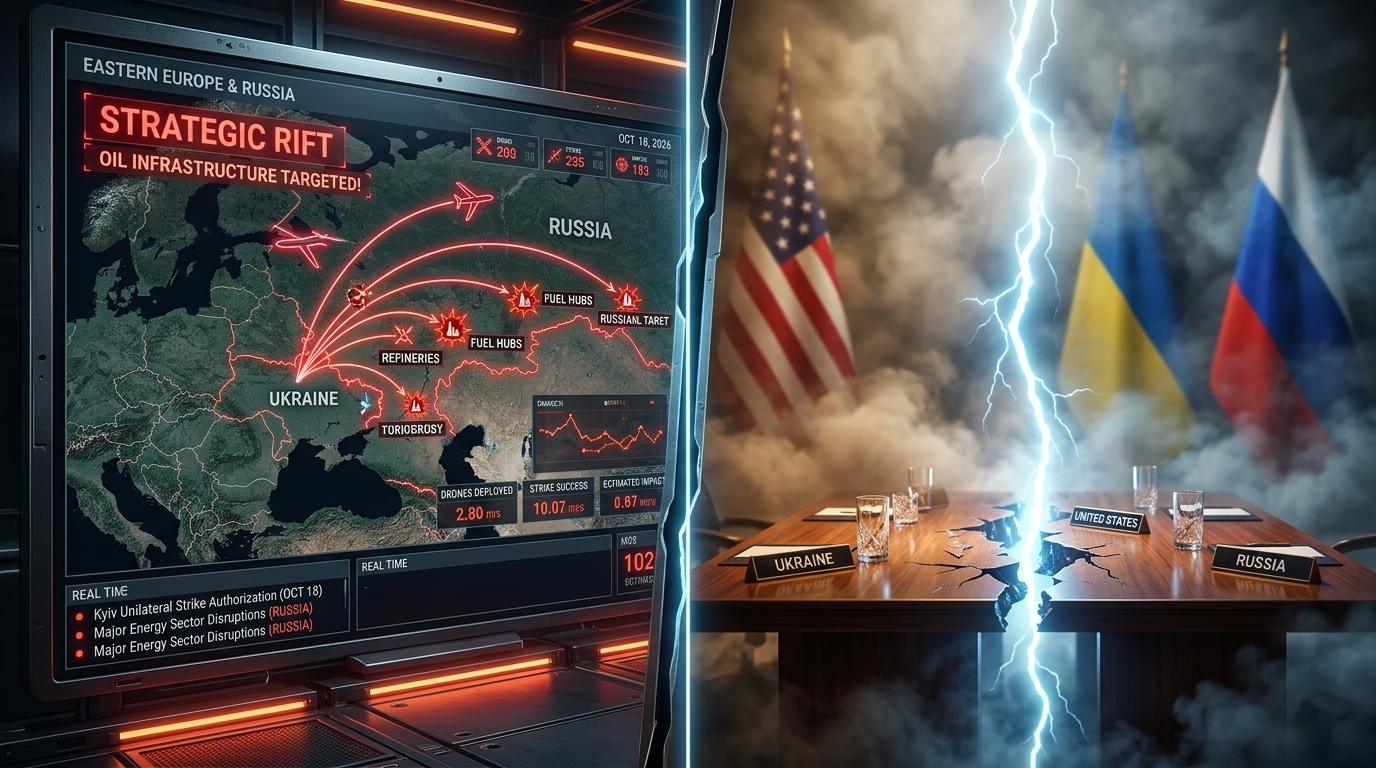
A seismic shift in United States foreign policy has sent shockwaves through Eastern Europe, fundamentally altering the diplomatic landscape of the ongoing war. President Donald Trump has publicly challenged the Ukrainian leadership's approach to the conflict, while a series of unexpected economic decisions by Washington has prompted an aggressive, unilateral military response from Kyiv.
As of October 18, 2026, the traditional Western coalition faces its most severe strategic division since the full-scale hostilities began.
1. Trump’s Stance: "No Peace Deal Without Russia"
In a series of highly publicized statements, U.S. President Donald Trump explicitly asserted that Washington will not back any peace negotiations that intentionally exclude the Russian Federation. Trump argued that a sustainable resolution is structurally impossible without bringing the Kremlin directly to the diplomatic table.
Furthermore, the American President directly accused Ukrainian President Volodymyr Zelensky of intentionally prolonging the war. Trump claimed that the Ukrainian administration’s refusal to make territorial concessions or adjust its diplomatic red lines is stalling a potential end to the conflict, signaling a sharp departure from Washington's previous stance of unconditional support for Kyiv.
2. Washington Eases Sanctions to Secure Fuel Supplies
The geopolitical friction intensified following a controversial economic directive from the White House. The United States government has officially authorized a temporary easing of select tariffs and economic sanctions against Russia.
According to White House officials, the strategic pivot was enacted to secure stable imports of Russian diesel and petroleum products, aiming to curb rising domestic energy costs within the United States. While Washington framed the policy as a temporary, pragmatic measure necessary for American economic stability, international analysts view it as a massive diplomatic victory for Moscow.
3. Zelensky’s Fury: "Sanctions Relief Strengthens Putin"
The reaction from Kyiv was immediate and fiercely critical. President Volodymyr Zelensky vehemently condemned the U.S. decision, stating that any form of sanctions relief at this juncture serves only to economically and politically strengthen Russian President Vladimir Putin.
Zelensky warned that reducing economic pressure on Moscow removes the primary non-military incentive for the Kremlin to stop its military operations. The Ukrainian leadership expressed deep concern that Washington's unilateral economic shifts could compromise the broader European security alliance.
4. Kyiv Defies Pressure: Massive Drone Strikes Hit Russian Refineries
Refusing to bow to diplomatic pressure from Washington, Ukraine responded by demonstrating its independent military capabilities. In one of the largest and most coordinated aerial operations of the year, Ukrainian forces launched a massive wave of long-range kamikaze drones deep into Russian territory.
The strategic targets were Russian oil refineries and fuel distribution networks. Local reports from inside Russia confirm multiple explosions and severe structural damage at energy facilities, as Kyiv effectively demonstrates that it retains the capacity to disrupt Russia's war economy—even as its primary Western ally shifts its diplomatic strategy.
Key Takeaways of the Diplomatic Rift
| Strategic Aspect | United States Position (Trump) | Ukrainian Position (Zelensky) |
|---|---|---|
| Negotiation Strategy | Direct inclusion of Russia is mandatory for any realistic peace deal. | Negotiations cannot occur while Russian forces occupy Ukrainian soil. |
| Economic Sanctions | Temporary relief is justified to secure vital diesel supplies for the U.S. | Any relief directly finances the Russian military apparatus. |
| Military Response | Urges an immediate halt to hostilities to prevent further infrastructure decay. | Escalating long-range drone strikes on Russian infrastructure to force a retreat. |