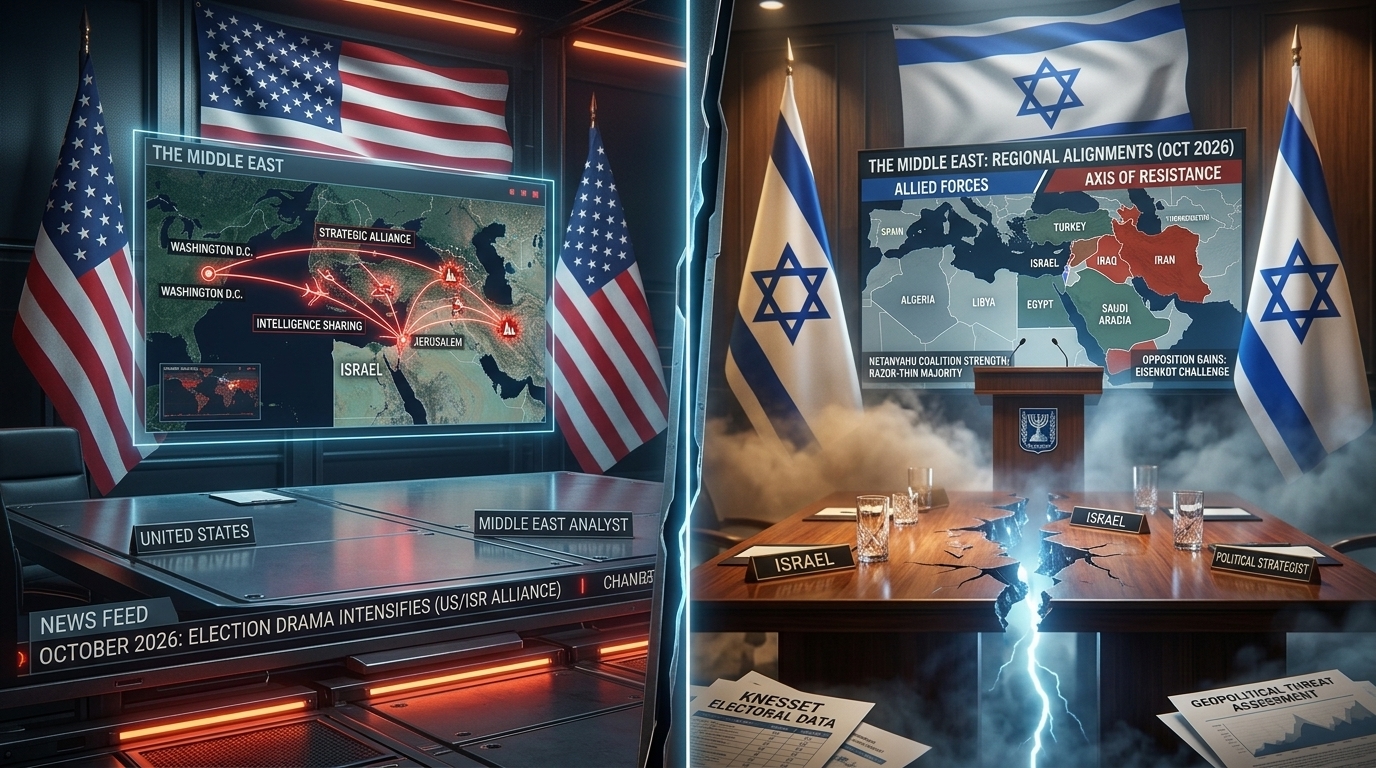
The razor-thin race for control of the Israeli Knesset has been completely upended by direct intervention from Washington. On Sunday, October 18, 2026, U.S. President Donald Trump officially issued a highly coveted, full political endorsement for embattled Israeli Prime Minister Benjamin Netanyahu—just nine days before the nation heads to the polls.
The decision has sent shockwaves through both domestic Israeli politics and international diplomatic circles, re-framing the upcoming election as a direct referendum on regional war strategy.
1. The Endorsement: "A Great Warrior and Partner for Peace"
Breaking with long-standing American diplomatic traditions of remaining neutral during foreign democratic elections, Donald Trump took to his Truth Social platform to announce his Complete and Total Endorsement of Netanyahu.
In his lengthy statement, Trump lauded the Likud party leader, calling him a “Great Warrior Prime Minister” and a crucial "partner for peace" in combatting the regional ambitions of the Islamic Republic of Iran. Trump coupled his praise with a stark ultimatum directed at Israeli voters, warning that "if Israel has the wrong leader, which would be anyone other than Bibi," the United States might be forced to confront Iranian threats alone—a task he explicitly stated he is "not inclined to do".
2. Netanyahu Reacts: "Together We Will Complete the Mission"
The endorsement was immediately weaponized as a massive campaign boost by Netanyahu's camp. The Prime Minister quickly released an official video response on social media platforms to express his deep gratitude to his "dear friend Donald".
"I am so honored and humbled by your extraordinary endorsement," Netanyahu stated, declaring that there "has never been a greater friend of Israel in the White House". Netanyahu used the opportunity to address American voters directly as well, attempting to tie Middle Eastern security to global economic stability by arguing that defeating the Iranian regime is the only viable path to permanently lowering global fuel and gas prices.
3. A Knife-Edge Vote: Can the Endorsement Save a Fractured Coalition?
Scheduled for October 27, 2026, this will be Israel’s first national election since the catastrophic events of October 7, 2023, which plunged the entire Middle East into deep military turmoil. Netanyahu is currently facing the political challenge of his life, with his leadership heavily scrutinized over major security failures, domestic economic strain, and ongoing international court investigations.
Recent polling data compiled ahead of the vote indicates that Netanyahu's current religious-nationalist coalition is projected to fall short of the crucial 61-seat majority needed to easily form a government in the 120-seat Knesset. His main challenger, former IDF Chief Gadi Eisenkot leading the centrist Yashar party, has fiercely pushed back against Trump's statements, describing the endorsement as an unwarranted outside intervention in a purely domestic democratic matter.
The Pre-Election Landscape in Israel
| Political Force / Factor | Key Leader | Current Polling Status | Position on US Intervention |
|---|---|---|---|
| Likud & Right-Wing Coalition | Benjamin Netanyahu | Projected to lose majority; fighting for survival. | Actively embraces Trump's backing as a sign of global strength. |
| Yashar & Centrist Opposition | Gadi Eisenkot | Leading in individual seats but faces coalition hurdles. | Condemns outside endorsement; demands focus on domestic security. |