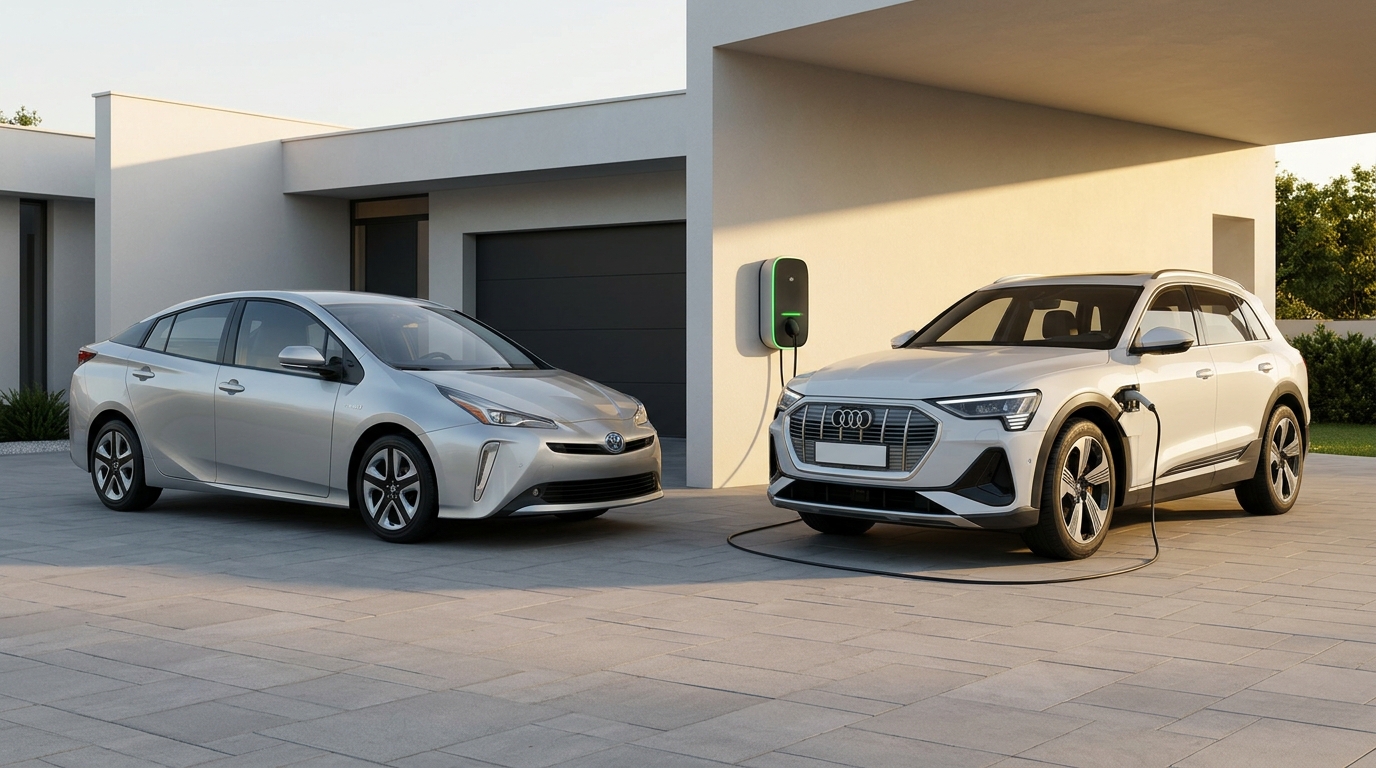
Shopping for a new or used vehicle today involves more than just picking a reliable brand or comfortable interior—it requires choosing the right powertrain. With fuel prices fluctuating constantly, electric vehicle (EV) incentives shifting, and hybrid models booming in popularity, drivers everywhere are asking the same practical question: Which type of car actually costs less to own over five years?
Looking purely at the dealership sticker price only tells half the story. Fuel efficiency, routine maintenance, insurance premiums, and resale value all play a massive role in your total cost of ownership. Here is a clear, real-world breakdown comparing Hybrid, Fully Electric (EV), and Traditional Gas Cars to help you make the smartest financial choice.
Quick Comparison: 5-Year Ownership Factors
| Feature | Traditional Gas Car | Hybrid Vehicle (HEV) | Fully Electric Vehicle (EV) |
|---|---|---|---|
| Upfront Purchase Price | Lowest ($) | Moderate ($$) | Highest ($$$) |
| Fuel / Charging Cost | Highest (Pump prices) | Low (45–55+ MPG average) | Lowest (When charged at home) |
| Routine Maintenance | Regular oil changes & brakes | Low (Regenerative braking saves pads) | Lowest (No oil, spark plugs, or exhaust) |
| Refueling Convenience | Fastest (3-minute gas stops) | Fastest (Uses regular gas stations) | Slower on road trips (20–40 min fast charge) |
| Best Driving Profile | Low annual mileage & tight budget | High-mileage commuters & road trips | Homeowners with a garage charger |
1. Traditional Gas Cars: Lowest Upfront Price and Maximum Convenience
Internal combustion engine (ICE) vehicles remain the most familiar and accessible choice on the road, especially in the affordable used-car market.
- Where it wins: If you drive fewer than 8,000 miles a year, live in an apartment without dedicated parking, or want the lowest possible upfront purchase price, a fuel-efficient compact gas car often wins financially simply because you avoid paying a higher price tag for battery technology you rarely utilize.
- The Trade-Off: You remain completely exposed to unpredictable spikes at the gas pump and face higher long-term maintenance costs for oil changes, transmission fluid, belts, and brake pads.
2. Hybrid Vehicles (HEVs): The Sweet Spot for Most Everyday Drivers
Standard hybrids combine a fuel-efficient gasoline engine with a small self-charging electric motor—meaning you never have to plug them into a wall outlet.
- Where it wins: For high-mileage commuters, rideshare drivers, and families taking frequent highway road trips, hybrids deliver unbeatable financial value. They routinely achieve 45 to 55+ miles per gallon, use regenerative braking that makes brake pads last upwards of 80,000 miles, and cost only slightly more upfront than their gas-only counterparts.
- The Trade-Off: Because hybrids carry both a gas engine and a battery pack, they still require routine oil changes, though overall reliability among top hybrid brands remains among the highest in the automotive industry.
3. Fully Electric Vehicles (EVs): Lowest Running Costs—With One Big Catch
Battery Electric Vehicles (BEVs) eliminate gasoline entirely, running 100% on rechargeable lithium-ion battery packs.
- Where it wins: If you own a home where you can install a Level 2 garage charger and take advantage of discounted overnight residential electricity rates, charging an EV costs roughly 60% to 70% less per mile than buying gasoline. Better yet, EVs have roughly 80% fewer moving drivetrain parts—eliminating oil changes, timing belts, and exhaust repairs forever.
- The Big Catch: If you rely primarily on public commercial DC fast chargers because you cannot charge at home, public fast-charging rates can cost nearly as much per mile as buying gasoline—erasing much of your fuel savings. Additionally, EVs often carry slightly higher auto insurance premiums and steeper initial depreciation.
4. Don't Overlook Insurance and Tire Costs Before Buying
Many first-time hybrid and EV buyers calculate fuel savings down to the penny while overlooking two hidden ownership expenses:
- Auto Insurance: Because electric vehicles use expensive battery packs and specialized aluminum body panels, comprehensive and collision insurance policies typically run 15% to 25% higher than comparable gas models. Always request an insurance quote using the exact VIN before signing dealership paperwork.
- Tire Wear: Instant electric torque and heavier battery weight cause EVs to wear through tires roughly 20% faster than lighter gas cars—making regular tire rotations essential.
5. How to Calculate Your Personal "Break-Even" Point
Before paying extra for a hybrid or electric model, run a quick three-minute math check:
- The Smart Formula: Take the price difference between the gas version and the hybrid/EV version of the same car (for example, $3,000 extra for the hybrid). Divide that difference by your estimated annual fuel savings (for example, $900 saved per year). In this scenario, you break even in 3.3 years—meaning every year you drive the car after that puts pure tax-free cash back into your pocket.
Choosing the Best Car for Your Driveway
There is no single winner for every driver. If you want maximum simplicity and zero range anxiety while slashing your gas bill in half, a self-charging hybrid is currently the smartest financial sweet spot for most households. If you have home garage charging and predictable daily commutes, going 100% electric unlocks the lowest per-mile operating cost on the road.