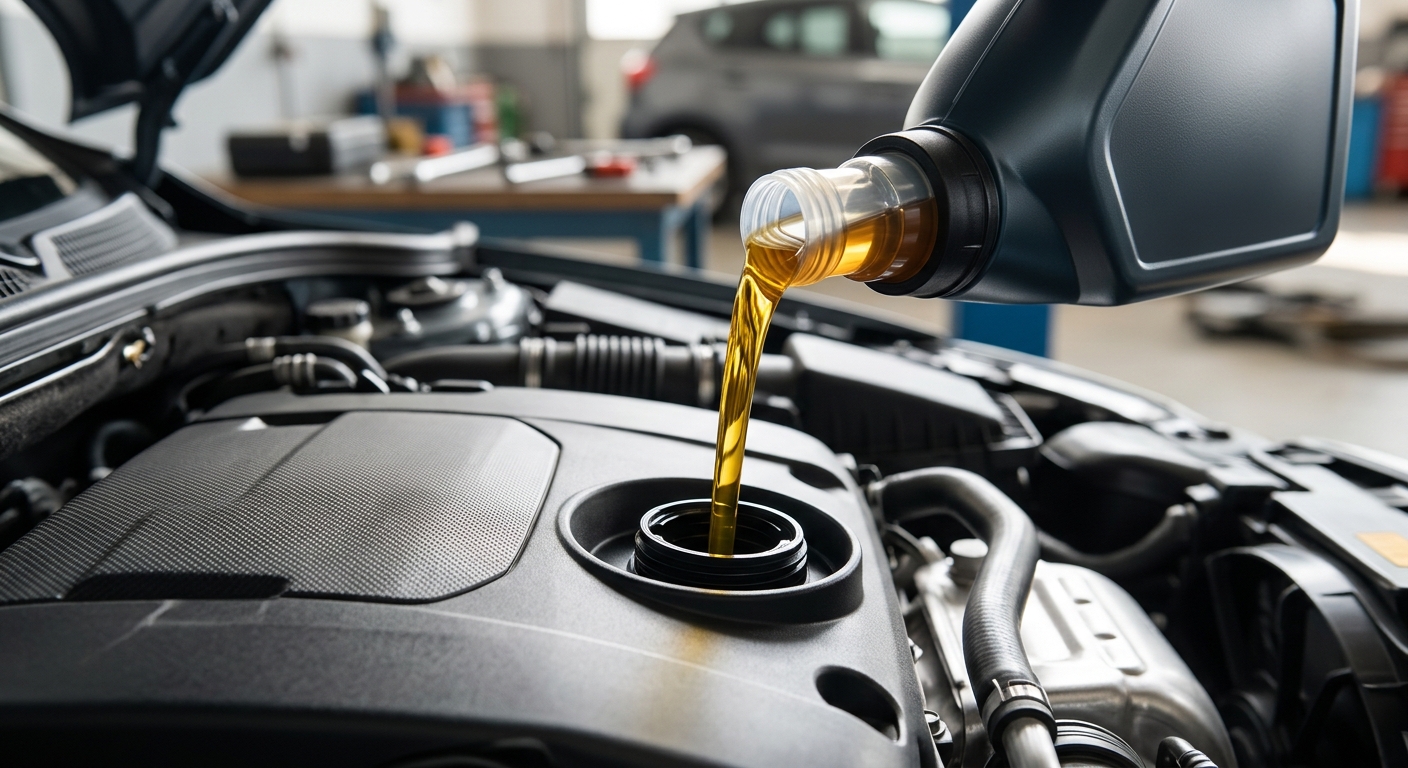
Unlike conventional motor oil refined directly from crude petroleum, Full Synthetic oil is chemically engineered in a laboratory to have uniform, pure molecules free of natural impurities.
- Why it shines: Modern engines run hotter, feature tighter internal tolerances, and frequently use small turbochargers that spin at over 150,000 RPM. Conventional oil breaks down into thick, destructive carbon sludge under high turbo heat, whereas Full Synthetic resists thermal breakdown, flows instantly during freezing winter cold starts, and lasts twice as long between changes—making its cost per mile driven virtually identical to cheaper conventional oil.
2. Ignore the Outdated "3,000-Mile Oil Change" Myth
For decades, quick-lube stickers on windshields trained drivers to change their oil every 3,000 miles or three months without exception.
- The Modern Reality: While 3,000-mile intervals made sense for 1980s carbureted engines running on basic mineral oil, almost all modern vehicles running Full Synthetic oil safely go 7,500 to 10,000 miles (or once every 12 months) between oil changes. Always follow the exact interval listed in your vehicle's Owner's Manual rather than a windshield reminder sticker—unless you regularly tow heavy trailers or drive in extreme dust.
3. When to Switch to "High-Mileage" Motor Oil
Once your odometer crosses 75,000 miles, rubber gaskets and crankshaft seals inside your engine naturally begin to shrink, harden, and weep small drops of oil.
- The Smart Upgrade: High-Mileage Full Synthetic oil includes specialized seal-conditioning additives that gently swell aging rubber gaskets to prevent minor oil leaks, along with extra anti-wear detergents designed to clean existing varnish from older piston rings. Switching at 75,000 miles is an inexpensive way to prevent costly gasket repairs down the road.
4. Don't Forget Transmission Fluid, Coolant, and Brake Fluid
Focusing exclusively on engine oil while ignoring your vehicle's other vital fluids is one of the fastest ways to trigger a $4,000 repair bill.
- Three Fluids That Save Thousands:
- Transmission Fluid: Even if a dealership claims your transmission has "lifetime fluid," changing automatic or CVT transmission fluid every 50,000 to 60,000 miles prevents overheating and slipping gears.
- Engine Coolant (Antifreeze): Old coolant turns acidic over time, corroding aluminum radiators and water pumps from the inside out. Flush and replace coolant roughly every 5 years or 60,000 miles.
- Brake Fluid: Brake fluid absorbs moisture from the air over time, which lowers its boiling point and rusts expensive ABS brake modules internally. Flush brake fluid every 2 to 3 years regardless of mileage.
5. How to Save 40% on Routine Maintenance Without Voiding Your Warranty
Many new-car buyers mistakenly believe they must pay steep dealership service prices to keep their factory warranty valid.
- Know Your Rights: Under consumer protection laws (such as the Magnuson-Moss Warranty Act in the U.S.), dealerships cannot void your factory warranty simply because you changed your oil at an independent local mechanic or did it yourself—as long as you use oil meeting the manufacturer's viscosity spec (such as 0W-20 or 5W-30) and keep dated receipts showing the mileage at each service.
Protecting Your Vehicle for the Long Haul
Spending $90 twice a year on quality Full Synthetic oil and routine fluid checks is vastly cheaper than taking on a $600 monthly car payment because an engine failed prematurely. Stick to your owner's manual schedule, check your oil dipstick once a month at the gas pump, and your car will easily reward you with 200,000 trouble-free miles.