Buying a pre-owned vehicle is one of the smartest ways to avoid steep new-car depreciation, potentially saving you ten thousand dollars or more upfront. However, purchasing a used car without a thorough inspection can quickly turn a bargain into a money pit filled with hidden engine problems, flood damage, or worn-out transmissions.
Even if a seller claims a car "runs like new," you do not need to be a certified master mechanic to spot major warning signs during a test drive. By checking a few critical areas before handing over any money, you can walk away from problematic vehicles—or use minor wear items to negotiate a much lower price. Here are six major red flags to inspect before buying any used car.
Quick Checklist: Essential Pre-Purchase Used Car Inspection
| Inspection Area | What to Look For | Serious Red Flag | Estimated Repair Cost |
|---|---|---|---|
| Vehicle History Report | Title status, accident records & odometer logs | Salvage/Rebuilt title or odometer rollback | Loss of 30%–50% resale value |
| Engine Oil & Fluids | Clean amber/brown oil & pink transmission fluid | Milky residue on oil cap or burnt-smelling fluid | $2,500 – $6,000+ |
| Undercarriage & Frame | Solid metal rails & clean suspension joints | Flaking structural rust or fresh weld marks | $1,500 – $4,000+ |
| Interior & Flood Signs | Dry carpets & clean seat mounting bolts | Musty mildew smell or rusted metal seat tracks | $3,000+ (Electrical failures) |
| Cold-Start Test Drive | Smooth idle, straight steering & quiet shifts | Blue/white exhaust smoke or transmission hesitation | $1,800 – $4,500+ |
1. Always Pull a Vehicle History Report Using the VIN
Before driving across town to look at a car, ask the seller for the 17-digit Vehicle Identification Number (VIN) located on the lower driver-side windshield or inside the driver’s door jamb.
- What to check: Run the VIN through a trusted database such as Carfax or AutoCheck. Verify that the vehicle has a clean title (avoid "Salvage," "Rebuilt," or "Flood" titles unless you are an experienced rebuilder), check for consistent odometer mileage readings over time, and confirm whether routine oil changes and manufacturer safety recalls were completed.
2. Check for Hidden Flood and Water Damage
Severe regional storms regularly push thousands of water-damaged vehicles back onto the used-car market with freshly cleaned interiors and polished paint. Flooded cars suffer from chronic electrical glitches and corroded wiring harnesses that fail months after purchase.
- How to spot it: Inspect the metal bolts and tracks underneath the front seats—if they are rusty while the rest of the cabin looks clean, water likely sat inside the floorboards. Also lift the spare tire cover in the trunk to check for dried mud lines, and sniff closely for heavy air fresheners masking a damp mildew odor.
3. Inspect Under the Hood Before the Engine Warms Up
Ask the seller not to start the vehicle before you arrive so you can inspect it stone cold. Some sellers warm up an engine beforehand to hide hard-starting issues, lifter ticks, or smoky exhaust.
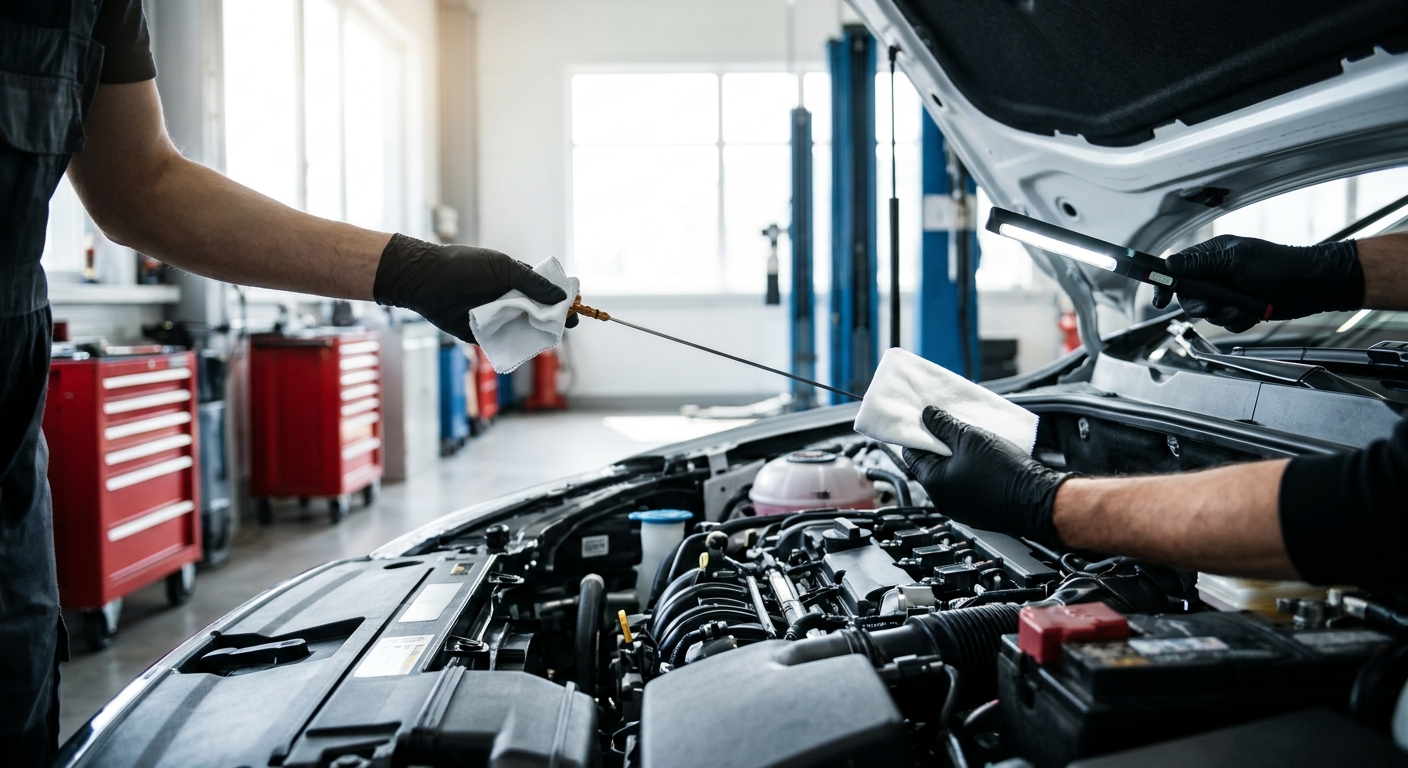
- What to check: Pull out the engine oil dipstick and unscrew the oil filler cap. Healthy oil looks translucent amber or dark brown. If you see a thick, creamy substance resembling chocolate milk under the oil cap, coolant is leaking into the engine oil—a classic sign of a blown head gasket costing thousands of dollars to repair.
4. Look Closely at Body Panel Gaps and Fresh Overspray
A minor fender-bender properly repaired at a certified body shop is rarely a dealbreaker, but poorly repaired structural collision damage compromises your safety in a future crash.
- How to spot it: Walk slowly around the entire car in bright daylight and examine the narrow gaps between the doors, hood, fenders, and trunk lid. Factory panel gaps are uniform and even from top to bottom. Uneven gaps, slightly mismatched paint shades under direct sunlight, or paint overspray on rubber window trim indicate previous bodywork that may not appear on an accident report.
5. Turn Off the Radio During a 20-Minute Test Drive
Never rush a five-minute drive around the block with the air conditioning blasting and music playing.
- What to test: Drive the car on both neighborhood streets and at highway speeds (60+ mph). Pay close attention to how the automatic transmission shifts—gear changes should feel smooth and prompt without revving high or clunking. On a straight, flat road, briefly loosen your grip on the steering wheel to verify the car tracks straight without pulling to one side or vibrating at highway speeds.
6. Never Skip an Independent Pre-Purchase Inspection (PPI)
Even if a used car passes every visual test with flying colors, the smartest investment any buyer can make is paying an independent local mechanic $100 to $150 for a Pre-Purchase Inspection (PPI).
- Why it pays off: A mechanic will put the vehicle up on a hydraulic lift to inspect brake pad thickness, suspension bushings, oil leaks, and computer trouble codes using a professional OBD-II scanner. If the mechanic finds $800 worth of worn tires or upcoming brake work, you can show the written estimate to the seller and negotiate $800 off the asking price—making the inspection pay for itself many times over.
Buying Your Next Used Car With Total Confidence
Patience is your strongest negotiating tool in the used-car market. By verifying the VIN history, inspecting a cold engine, checking for hidden rust or flood signs, and hiring an independent mechanic before signing the bill of sale, you protect your bank account and drive away in a reliable vehicle built to last for years.