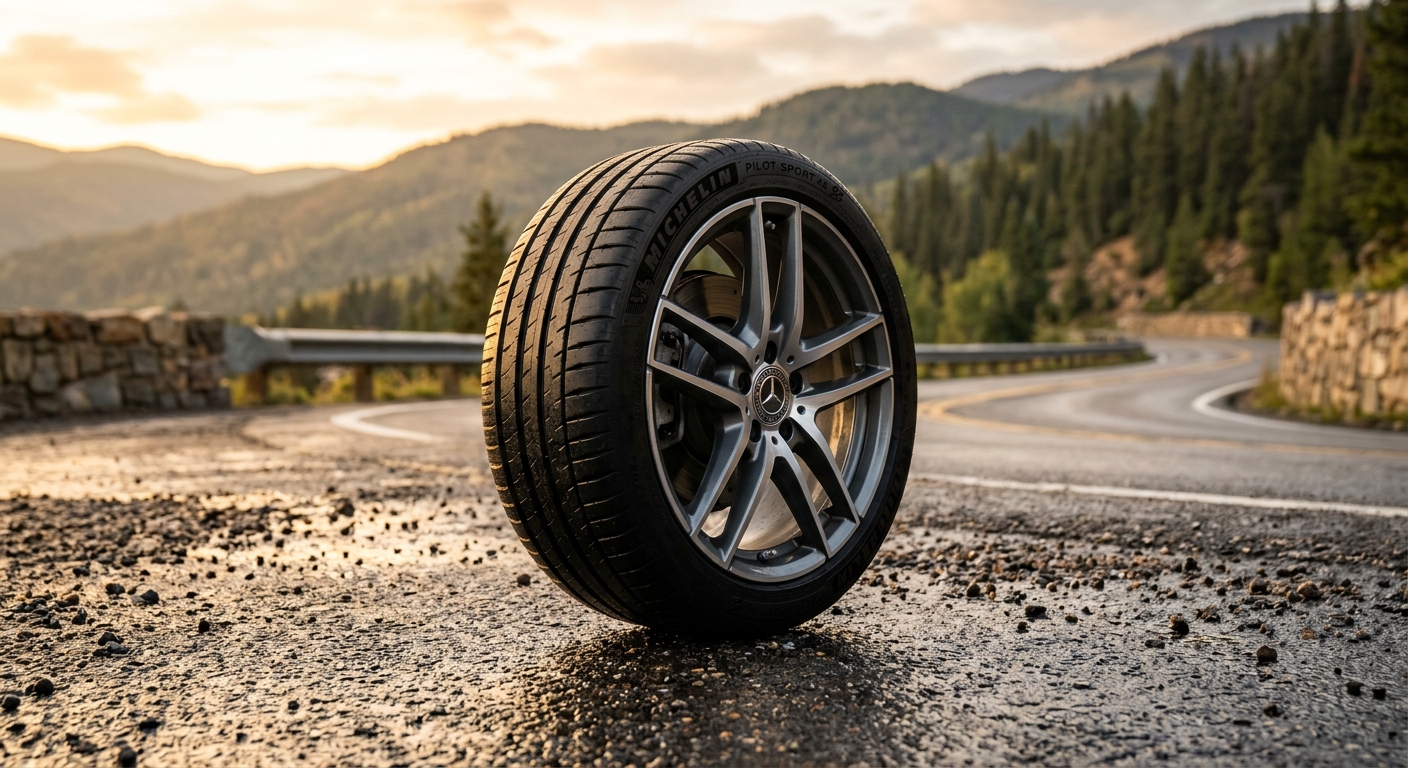
Tires are the only part of your vehicle that actually touches the road, making them critical for braking safety, fuel efficiency, and ride comfort. Yet, replacing a full set of four tires is a major expense that often catches drivers off guard—especially when poor maintenance forces them to buy replacements years earlier than necessary.
Understanding how to pick the best tires for your specific driving conditions and following a few simple maintenance habits can easily add 20,000 miles or more to your tread life. Here is a practical guide to choosing the right tires and maximizing your investment.
Quick Comparison: Choosing the Right Tire Type
| Tire Category | Best Driving Conditions | Tread Life & Durability | Comfort & Noise Level |
|---|---|---|---|
| All-Season Tires | Everyday commuting, dry roads, and light rain | Long-lasting (50,000–75,000 miles) | Quiet, smooth, and fuel-efficient |
| Performance Tires | Sports sedans, sharp cornering, and highway speeds | Moderate (30,000–45,000 miles) | Firmer ride with maximum road grip |
| All-Terrain Tires | Trucks, SUVs, gravel paths, and light off-roading | Heavy-duty (45,000–60,000 miles) | Slightly louder road hum on pavement |
| Winter / Snow Tires | Freezing temperatures, heavy snow, and icy roads | Seasonal (Used 3–4 months/year) | Soft rubber built for extreme cold grip |
1. Decode the Sidewall Numbers Before Shopping
Every tire features a sequence of letters and numbers molded onto its rubber sidewall (for example: P215/65R16 98H). Buying the wrong size or load rating can hurt your speedometer accuracy and compromise vehicle safety.
- The Smart Fix: Check the yellow-and-white sticker located inside your driver’s side door jamb—not just the old tires currently on your car, in case a previous owner installed the wrong size. Match the exact width, aspect ratio, rim diameter, and speed/load index recommended by your vehicle manufacturer.
2. Rotate Your Tires Every 5,000 to 7,500 Miles
Because the front tires on most vehicles carry the heavy weight of the engine and handle all the steering and most of the braking forces, they wear down nearly twice as fast as the rear tires.
- The Smart Fix: Schedule a tire rotation every time you get an oil change (roughly every 5,000 to 7,500 miles). Moving the front tires to the back and crossing sides ensures all four tires wear down evenly—preventing you from having to replace the entire set prematurely just because two tires went bald.
3. Keep Wheel Alignment and Balancing in Check
Hitting a single deep pothole or bumping against a concrete curb can knock your vehicle’s suspension out of alignment, causing the tires to scrub sideways against the asphalt as you drive.
- The Smart Fix: Pay attention to warning signs like your steering wheel vibrating at highway speeds or your car gently pulling to the left or right on a flat road. Getting a professional four-wheel alignment once a year protects your tires from uneven "feathering" or inside-edge wear and noticeably improves your gas mileage.
4. Check Inflation Pressure When Tires Are Cold
Driving with tires that are underinflated by just 5 or 6 PSI causes the rubber sidewalls to flex excessively, generating dangerous internal heat that destroys the tread from the inside out.
- The Smart Fix: Check your tire pressure once a month in the morning before driving (when the tires are cold). Keep them inflated to the exact PSI listed on your door-jamb sticker, and remember that cold winter weather naturally causes air pressure to drop by about 1 to 2 PSI for every 10-degree drop in temperature.
5. Use the "Penny Test" to Measure Tread Depth Safely
Waiting until your tires look completely smooth is a major safety hazard, especially during heavy rainstorms when worn treads cannot channel water away from the rubber, causing dangerous hydroplaning.
- The Smart Fix: Insert a standard coin (such as a U.S. penny with Lincoln’s head upside down) into the deepest groove of your tire tread. If you can see the top of Lincoln's head completely, your tread has worn down to 2/32 of an inch—meaning it is legally worn out and time to shop for fresh tires immediately.
Protecting Both Your Safety and Your Wallet
Quality tires are one of the highest-return safety investments you can make for your car. By selecting the right tread pattern for your local climate and sticking to routine rotations and pressure checks, you will enjoy a quieter ride, better fuel economy, and thousands of extra miles before your next trip to the tire shop.