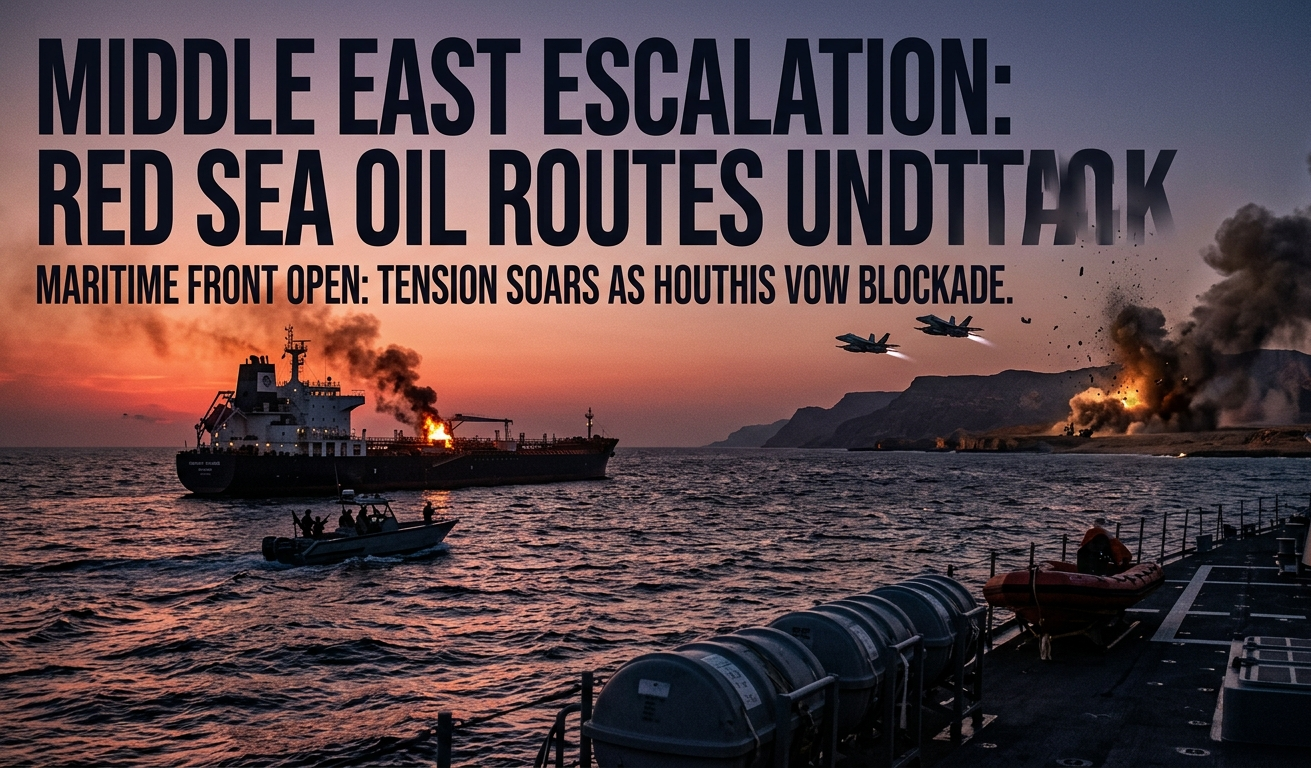
Middle East Escalation: New Front in Red Sea Threatens Global Oil Trade Routes
The war involving the United States, Israel, and Iran took a dramatic turn this Saturday (25) as a new battlefront opened. Following nearly two consecutive weeks of intense daily bombardments, the region is experiencing a temporary lull on Iranian soil, but the conflict has aggressively shifted to the maritime chokepoints of the Red Sea and the Gulf of Oman, driving Brent crude oil prices back above $100 per barrel.
Main Crisis Hotspots
Yemen and Saudi Arabia: The New Red Sea Front
- Attack on Tankers: Houthi rebels, allied with Tehran, launched coordinated strikes using dozens of ballistic missiles and drones against two strategic Saudi Aramco facilities in the coastal cities of Jazan and Yanbu. A Saudi vessel sustained minor hull damage.
- Riyadh's Retaliation: In immediate response, the Saudi Arabia-led military coalition initiated a heavy aerial bombing campaign against Houthi positions in the port city of Hodeidah, Yemen.
- Strait Blockade: The Houthis formally announced their intention to completely block the Bab el-Mandeb strait. This route, combined with the already besieged Strait of Hormuz, is vital for global container and fuel traffic through the Suez Canal.
United States: Pause in Air Strikes and Political Tension
- First Night Without Strikes: The US Central Command (CENTCOM) reported no new air raids over Iran last night, breaking a cycle of 13 consecutive nights of massive bombardments against Iranian military infrastructure.
- Active Naval Blockade: Despite the lull in the skies, US naval forces forcibly disabled a commercial ship in the Gulf of Oman after the vessel repeatedly tried to breach the maritime blockade imposed on Iranian ports.
- Threat of Massive Action: Speaking to reporters at the White House, President Donald Trump stated that the military campaign is going extremely well and that he is evaluating the authorization for a massive strike, larger than ever before, if Tehran rejects negotiation terms. Iran refused the latest ceasefire proposal presented by mediators on July 23.
Humanitarian Crisis at Sea
The United Nations (UN) issued an urgent warning regarding global economic and humanitarian consequences. According to the International Maritime Agency, at least 6,000 sailors across 400 different merchant ships remain stranded or abandoned in the Strait of Hormuz, lacking regular access to food, fuel, or safe evacuation routes.