Subheadline: Constitutional clash intensifies in Washington as Republicans shield executive command over the escalating Middle East conflict.
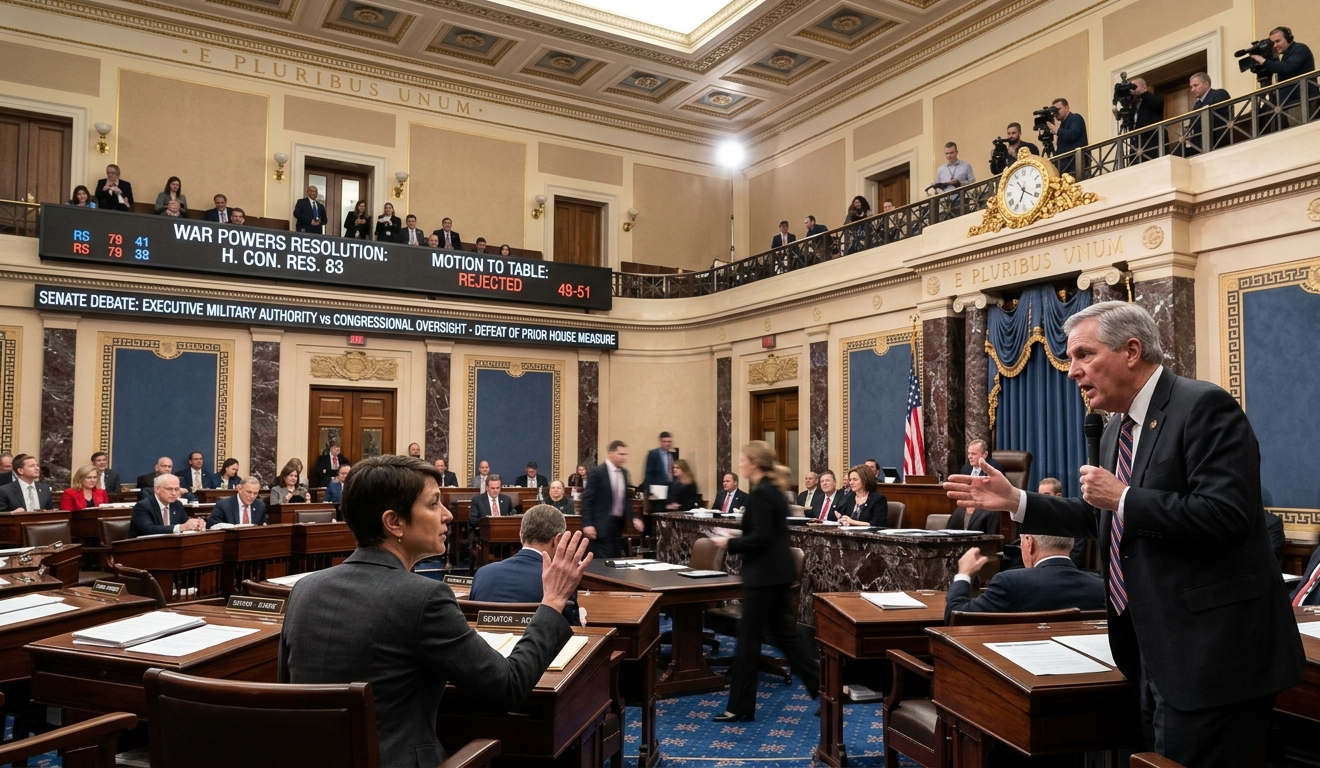
A high-stakes constitutional showdown unfolded in Washington this Thursday (23) as the U.S. Congress locked horns over the scope of presidential military authority. In a swift legislative response to consecutive nights of airstrikes in the Persian Gulf, the House of Representatives passed a restrictive War Powers resolution aimed at forcing President Donald Trump to halt unauthorized military operations against Iran. However, the legislative push was short-lived, as the Republican-controlled Senate swiftly blocked and defeated the measure later in the afternoon.
The intense legislative battle underscores growing anxieties on Capitol Hill regarding the financial and strategic costs of a protracted conflict, with ongoing U.S. operational expenditures in the region already surpassing $37.5 billion.
House Demands Oversight Amid Strategic Operations
Democratic lawmakers spearheading the House resolution invoked the War Powers Resolution of 1973, arguing that the administration's prolonged offensive constitutes an undeclared war.
- The 30-Day Mandate: The bill would have legally compelled the executive branch to terminate all hostile engagements against Iranian forces within 30 days unless a formal declaration of war or a specific statutory authorization was granted by Congress.
- Executive Pushback: The White House fiercely condemned the vote, releasing an official statement characterizing the House resolution as a "deeply flawed measure that undermines national security and misinterprets core executive authority."
The Senate Shield and Article II Defense
Republicans in the Senate successfully insulated the White House, echoing President Trump’s stance that swift, unhindered military action is vital to protecting global trade routes and U.S. regional assets.
The administration maintains that the continuous airstrikes and the strict maritime blockade on Iranian ports are legally justified under Article II of the U.S. Constitution. This clause designates the president as the Commander-in-Chief with the inherent power to deploy forces to counter imminent national threats without premeditated congressional approval. Trump criticized the opposition during a press briefing, stating that trying to micromanage military deployment in the middle of a strategic operation sends a dangerous signal of weakness to Tehran.