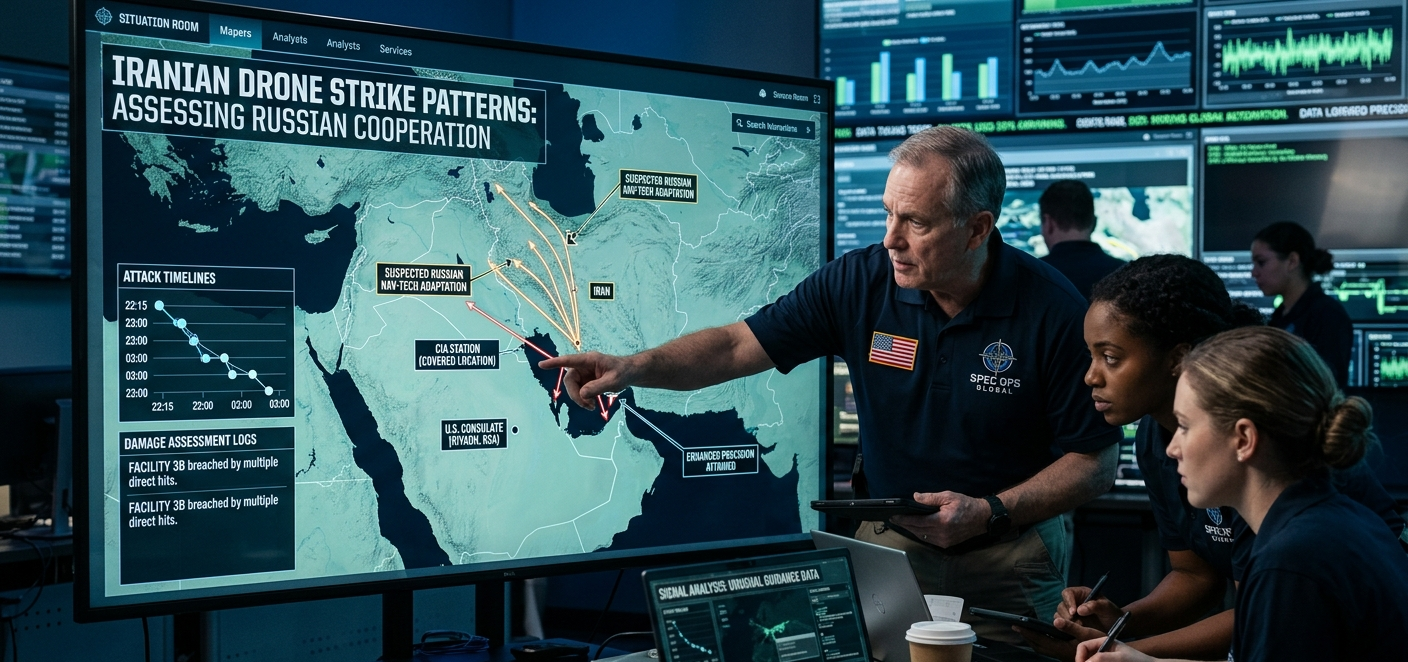
Intelligence analysts investigate whether Moscow provided advanced navigation tech and critical targeting data to bypass Patriot missile shields in the Gulf.
United States intelligence agencies have launched a high-priority investigation into whether Russia assisted Iran in executing devastatingly precise drone strikes against multiple secure CIA facilities across the Persian Gulf region. The formal probe follows a wave of highly coordinated aerial assaults, which experts argue utilized advanced guidance capabilities beyond Iran's typical domestic military tech portfolio.
While the Kremlin has officially dismissed the reports as "fake news," defense analysts suggest the geopolitical fallout serves Moscow by heavily diverting U.S. attention and military funding away from the European theater.
Upgraded Shahed Drones and The Kometa-M System
Western officials tracking intelligence files believe that Russia provided critical hardware upgrades that significantly sharpened Tehran's offensive accuracy.
- The Precision Strike: During a raid against a secret CIA station housed inside the U.S. Embassy in Riyadh, one drone blew a hole through a specific vulnerable section of the facility's outer wall, allowing a second drone to instantly fly through the breach before detonating.
- Anti-Jamming Capabilities: Wreckage analysis indicates that Russia supplied Tehran with the sophisticated Kometa-M satellite navigation receiver. This military component is vastly superior to standard Iranian electronics, rendering the drones highly resistant to the heavy electronic warfare and signal jamming deployed by Western forces.
- Targeting Strategies: Intelligence reports suggest Russia shared specialized battlefield data, including swarm maneuvering tactics perfected in Ukraine, enabling Iranian drones to successfully penetrate dense air defense umbrellas like Patriot networks.
Prolonged Regional Proxy Conflicts
The investigation has heightened anxieties in Washington regarding the deepening military alliance between Moscow and Tehran. Former intelligence officers note that both nations share a mutual strategic objective to permanently dismantle American influence in the Middle East. With U.S. regional operational expenditures already exceeding $37.5 billion, a prolonged proxy war threatens to further destabilize energy security and international shipping corridors.