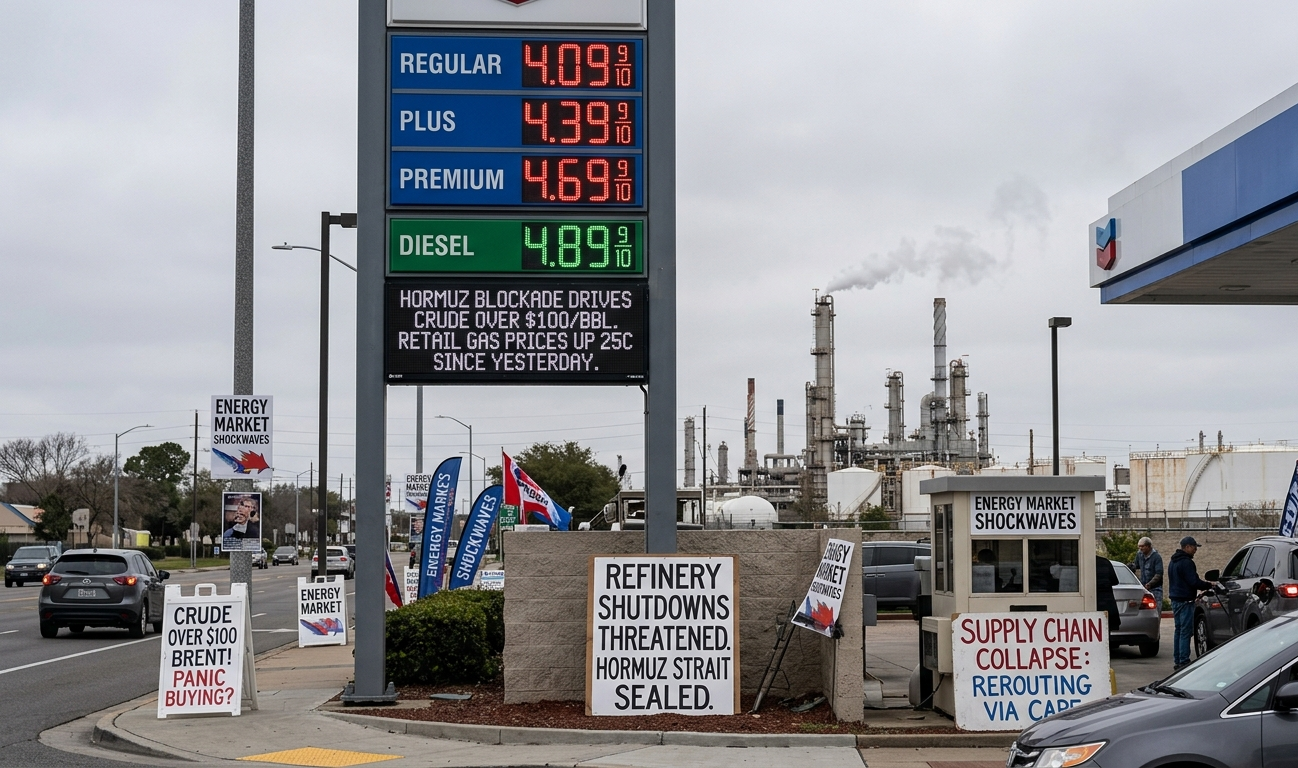
Subheadline: U.S. gasoline average jumps to $4.09 per gallon as retaliatory missile strikes and strategic maritime blockades choke vital oil supply routes.
Global energy markets experienced severe volatility this Thursday (23) as international fuel prices recorded their sharpest single-day spike in months. The price of Brent crude oil surged past the critical $100-per-barrel threshold, driven by the compounding crises of Houthi missile attacks on Saudi tankers and Iran’s declaration to seal off the strategic Strait of Hormuz.
In the United States, consumers felt the immediate impact at the pump, with the national average for regular gasoline jumping rapidly to $4.09 per gallon, fueling renewed fears of global inflation.
Broken Supply Chains and Skyrocketing Freight Costs
The immediate catalyst for the price spike is the sudden paralysis of the Bab-el-Mandeb Strait, a vital chokepoint through which millions of barrels of crude transit daily.
- Shipping Redirection: Major maritime conglomerates have suspended all transits through the Red Sea, ordering fleet captains to bypass the conflict zone entirely and reroute around Africa's Cape of Good Hope.
- Sailing Bottlenecks: Logistics analysts warn that this detour appends roughly 10 to 14 days to standard transit timelines, severely inflating operational maritime fuel usage and forcing a 25% increase in war-risk shipping insurance.
- Refinery Strain: European and Asian energy hubs are bracing for localized supply crunches as delayed crude deliveries threaten to stall production lines over the coming weeks.
Market Uncertainty as Geopolitical Escalation Looms
Financial trading floors remain highly erratic as traders factor in the growing likelihood of a prolonged military conflict. President Donald Trump's recent public threats to widen the Pentagon's target list to include domestic Iranian power grids and energy infrastructure have left energy markets with little hope for a near-term cooling period.